
Pride and Prejudice
Pride and Prejudice
by Jane Austen
Elizabeth Bennet and Mr. Darcy misjudge each other in a comedy of marriage, income, and pride. Austen’s second published novel is still the surest entrance to her shelf.
Subject
Longer fiction still in the public domain: social worlds, moral arguments, and plots that have outlasted their first printers. Each card below is a catalog entry, not a file stored here.
by Jane Austen
Elizabeth Bennet and Mr. Darcy misjudge each other in a comedy of marriage, income, and pride. Austen’s second published novel is still the surest entrance to her shelf.

by Jane Austen
Emma Woodhouse has money, leisure, and a talent for arranging other people’s lives. The novel lets her be charming and wrong in the same sentence.
by Jane Austen
Two sisters, turned out of their home, try sense and feeling as ways of surviving love and reduced means. It was Austen’s first published novel.
by Jane Austen
Anne Elliot broke an engagement years ago and has had to live quietly with the decision. A return of the man she refused gives the book its second chance.

An orphan becomes a governess and refuses every arrangement that would make her less than a person. The house at Thornfield holds a secret the marriage plot cannot step around.
by Emily Brontë
Heathcliff and Catherine’s attachment wrecks two households across two generations. The story is told by a tenant and a housekeeper, never by the pair at its center.

by Mary Shelley
Victor Frankenstein builds a living being and then abandons it. The creature’s education, and Victor’s refusal to answer for what he made, are the book’s real experiment.

by Bram Stoker
Jonathan Harker’s travel diary opens onto a count who intends to move to London. The rest of the novel is a coalition of notes, blood, and timetables trying to stop him.

by Oscar Wilde
A young man wishes that a portrait would age in his place. Wilde’s only novel follows the wish into influence, cruelty, and a picture locked in a room.
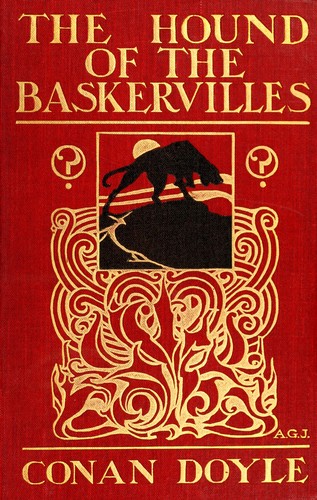
A family legend about a hound on the Devon moor brings Holmes out of a silence Doyle had meant to be permanent. The rational explanation has to earn its place against the fog.

Jim Hawkins finds a map and goes to sea with a crew that is not what the advertisement promised. Long John Silver remains the model of a charming villain.

A London lawyer tries to understand the tie between a respectable doctor and a violent man who shares his house. Stevenson’s short novel is a study of a self split on purpose.

London and Paris before and during the French Revolution, joined by a look-alike, a prisoner, and a sacrifice. The opening sentence is famous; the plot earns it.

Pip is lifted out of a forge by money whose source he misunderstands. Dickens’s late novel is about class, gratitude, and the patron Pip invents in his head.

Ishmael ships on the Pequod under a captain hunting one white whale. The book stops for whales, work, and metaphysics, then returns to the chase.

by Mark Twain
Huck Finn fakes his death and rafts the Mississippi with Jim, who is escaping enslavement. Twain’s novel is funny, and it does not let the joke forgive the country it travels.

Meg, Jo, Beth, and Amy March grow up in a household short of money and long on opinions. Jo’s wish to write is as much the plot as any marriage.

Matthew and Marilla Cuthbert ask for a boy from the orphanage and receive Anne Shirley. She talks, imagines, and slowly makes herself necessary to Avonlea.

Mary Lennox arrives at a Yorkshire manor and finds a garden no one is allowed to enter. Tending it changes her, and the cousin shut in another room.

by Jack London
Buck, a stolen California dog, is worked north into the Yukon. London tells the story from the animal’s side of the harness.

by H. G. Wells
A Victorian inventor rides his machine to a future in which humanity has split. Wells’s novella is a social argument dressed as a traveler’s report.

by H. G. Wells
Martian cylinders fall on the English countryside and the narrator walks through the collapse of ordinary life. Wells aimed the invasion at the empire that had invaded others.
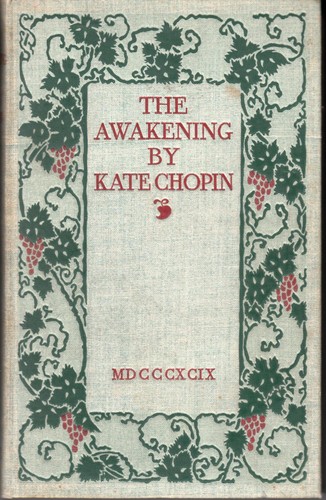
by Kate Chopin
Edna Pontellier, a wife in Creole New Orleans, stops agreeing that her life is already decided. Chopin’s novel was received coldly and later read as a classic.

Raskolnikov tests a theory that some people may kill for a higher purpose, and the theory does not survive the act. This entry points to a public-domain English translation.

by Leo Tolstoy
Anna’s affair and Levin’s search for a workable life run side by side in imperial Russia. Tolstoy gives the social world as much weight as the passion. The link is to a public-domain English translation.

Edmond Dantès is imprisoned on a false charge and comes back, years later, with a new name and a plan. Dumas makes patience itself into an adventure.
by Victor Hugo
Jean Valjean leaves prison and is pursued across France by Inspector Javert, while Hugo pauses to write about sewers, convents, and justice. The catalog links a public-domain English translation.

A country gentleman renames himself a knight and rides out to enforce the plots of chivalric books. Cervantes’s novel is the comedy of taking reading literally. The link is to a public-domain English translation.

Hester Prynne wears a letter the town requires, while the father of her child stays unnamed. Hawthorne’s novel is about punishment as a public art.

Nick Carraway rents a house next to Jay Gatsby’s parties and slowly learns what the parties are for.

Through the Looking-Glass is the sequel to his Alice's Adventures in Wonderland, in which many of the characters were anthropomorphic playing cards. In this second novel the theme is chess.

Moby-Dick; or, The Whale turns on the sailor Ishmael's narrative of the maniacal quest of Ahab, captain of the whaling ship Pequod, for vengeance against Moby Dick, the giant white sperm whale that bit off his leg on the ship's previous voyage.

by Mark Twain
The Adventures of Tom Sawyer, Complete is set in the 1830s–1840s in the fictional town of St. Petersburg, which is based on Hannibal, Missouri, where Twain lived as a boy. In the novel, Sawyer has several adventures, often with his friend Huckleberry Finn.

The House of the Seven Gables stays with a New England family and their ancestral home. In the book, Hawthorne explores themes of guilt, retribution, and atonement, and colors the tale with suggestions of the supernatural and witchcraft.

by Mark Twain
Tom Sawyer Abroad features Tom Sawyer and Huckleberry Finn in a parody of adventure stories like those of Jules Verne.

by Mark Twain
Tom Sawyer, Detective is a sequel to The Adventures of Tom Sawyer, Adventures of Huckleberry Finn, and Tom Sawyer Abroad. Tom Sawyer attempts to solve a mysterious murder in this burlesque of the immensely popular detective novels of the time.

by Thomas Hardy
Far from the Madding Crowd originally appeared anonymously as a monthly serial in Cornhill Magazine, where it gained a wide readership. Far from the Madding Crowd is set in Thomas Hardy's Wessex in rural southwest England, as had been his earlier Under the Greenwood Tree.

by Thomas Hardy
Tess of the d'Urbervilles: A Pure Woman initially appeared in a censored and serialised version, published by the British illustrated newspaper The Graphic, then in book form in three volumes, and as a single volume. Although now considered a major novel of the 19th century, Tess of the d'Urbervilles received mixed reviews when it first appeared, in part because it challenged the morals of late Victorian England.

Freckles is primarily set in the Limberlost Swamp area of Indiana, with brief scenes set in Chicago. The title character also appears briefly in Porter's A Girl of the Limberlost.
by Mark Twain
A Tramp Abroad details a journey by the author, with his friend Harris (a character created for the book, and based on his closest friend, Joseph Twichell), through central and southern Europe. While the stated goal of the journey is to walk most of the way, the men find themselves using other forms of transport as they traverse the continent.

by Thomas Hardy
The Return of the Native first appeared in the magazine Belgravia, a publication known for its sensationalism, and was presented in 12 monthly instalments from 9 January to 19 December. Because of the novel's controversial themes, Hardy had some difficulty finding a publisher; reviews, however, though somewhat mixed, were generally positive.

The Rise of Silas Lapham stays with the materialistic rise of Silas Lapham from rags to riches, and his ensuing moral susceptibility. Silas earns a fortune in the paint business, but he lacks social standards, which he tries to attain through his daughter's marriage into the aristocratic Corey family.

The Moonstone is an early example of the modern detective novel, and established many of the ground rules of the modern genre. Its publication was started on 4 January 1868 and was completed on 8 August 1868.

by Jean Webster
Daddy-Long-Legs stays with the protagonist, Jerusha "Judy" Abbott, as she leaves an orphanage and is sent to college by a benefactor whom she has never seen. Daddy-Long-Legs was initially serialized in the April–September issues of the Ladies' Home Journal, and first published in book form by The Century Company.

by Frank Norris
McTeague: A Story of San Francisco recounts a couple's courtship and marriage, and their subsequent descent into poverty and violence as the result of jealousy and greed. McTeague: A Story of San Francisco was the basis for the films McTeague and Erich von Stroheim's Greed.

by Mrs. Rowson
Charlotte Temple recounts a schoolgirl, Charlotte Temple, who is seduced by a British officer and brought to America, where she is abandoned, pregnant, sick and in poverty. The first American edition was published in 1794 and the novel became a bestseller.

The Phantom of the Opera was first published as a serial in Le Gaulois from 23 September to 8 January, and was released in volume form in late March by Pierre Lafitte. The Phantom of the Opera is partly inspired by historical events at the Paris Opera during the nineteenth century, and by an apocryphal tale concerning the use of a former ballet pupil's skeleton in a production of Carl Maria von Weber's Der Freischütz.

by Henry James
The American is an uneasy combination of social comedy and melodrama concerning the adventures and misadventures of Christopher Newman, an essentially good-hearted but rather gauche American businessman on his first tour of Europe.

by Henry James
The Europeans is a comedy contrasting the behaviour and attitudes of two visitors from Europe with those of their relatives living in the "New" World of New England. The Europeans first appeared as a serial in The Atlantic Monthly for July–October.

by Henry James
One of James's best-known and most acclaimed longer tales, The Aspern Papers is based on the letters Percy Bysshe Shelley wrote to Mary Shelley's stepsister, Claire Clairmont, who saved them until she died. Set in Venice, The Aspern Papers demonstrates James's ability to generate suspense while never neglecting the development of his characters.

by Thomas Hardy
A pair of blue eyes was the first of Hardy's novels to bear his name and was included by Hardy in his "romances and fantasies".

by Frank Norris
The Octopus: A Story of California describes the wheat industry in California, and the conflicts between wheat growers and a railway company. Norris was inspired to write the novel by the Mussel Slough Tragedy involving the Southern Pacific Railroad.

by Anna Sewell
Black Beauty was written from a horse as main character's perspective. She wrote it in the last years of her life, during which she was bedridden and seriously ill.

A Dream of John Ball; and, A King's Lesson features the rebel priest John Ball, who was accused of being a Lollard. He is famed for his question "When Adam delved and Eve span, who was then the gentleman?

The Country of the Pointed Firs is considered by some literary critics to be her finest work.

by Daniel Defoe
The Fortunes and Misfortunes of the Famous Moll Flanders purports to be an autobiographical account of the life of the eponymous heroine, detailing her exploits from birth until old age as she uses her wits, cunning and charm to provide herself with financial security. While the novel is now generally attributed to Defoe, and his name is given as the author in modern printings, the original text does not list an author and was presented as an autobiography.

by Daniel Defoe
A Journal of the Plague Year Being Observations or Memorials of the Most Remarkable Occurrences, as Well Public as Private, Which is an account of one man's experiences of the year, in which the bubonic plague struck the city of London in what became known as the Great Plague of London, the last epidemic of plague in that city, as part of the larger, centuries-long second plague pandemic.

The Romany Rye is a novel by George Borrow, written in as a sequel to Lavengro.

by Henry James
The Ambassadors is a dark comedy which follows the trip of protagonist Lewis Lambert Strether to Paris, France to bring Chad Newsome, the son of his widowed fiancée, Mrs Newsome, back to the family business. The Ambassadors is written in the third-person, from Strether's point of view.

by Eleanor H. (Eleanor Hodgman) Porter
Just David was among the top six bestsellers in cities across the United States, and in July it was the second bestselling novel. Originally published by Houghton Mifflin, it recounts a young boy, David, who must learn to adapt to living with others after the death of his reclusive father; along the way, the villagers and his adoptive parents adapt as much or more to him.

Maggie: A Girl of the Streets turns on Margaret "Maggie" Johnson, an 18-year-old girl from the Bowery who is driven to prostitution due to her failed relationship with a young man named Pete Murphy who leaves her for another girl named Nellie Griffiths, and also due to poverty and solitude.

by Madame de (Marie-Madeleine Pioche de La Vergne) La Fayette
The Princess of Cleves was regarded by many as the beginning of the modern tradition of the psychological novel and a classic work. Its author is generally held to be Madame de La Fayette.

by abbé Prévost
Manon Lescaut tells a tragic love story about a nobleman (known only as the Chevalier des Grieux) and a common woman (Manon Lescaut). Their decision to live together without marriage is the start of a moral decline that also leads to gambling, fraud, theft, murder, and Manon's death as a deportee in New Orleans.

Little Lord Fauntleroy was published as a serial in St. Nicholas Magazine, then as a book by Scribner's (the publisher of St. Nicholas) in New York. Little Lord Fauntleroy was also published that year in November by Frederick Warne & Co.

Heart of Darkness is widely regarded as a critique of European colonialism in Africa, whilst also examining the themes of power dynamics and morality. Although Conrad does not name the river on which most of the narrative takes place, at the time of writing, the Congo Free State—the location of the large and economically important Congo River—was a private colony of Belgium's King Leopold II.

by George Eliot
Silas Marner: The Weaver of Raveloe is the third novel by English author George Eliot; it was published on 2 April. A seemingly simple story of a linen weaver, Silas Marner is notable for its strong realist bent, as well as its sophisticated treatment of a variety of issues ranging from religion to industrialisation to community.

The Mystery of Edwin Drood was his final novel and was left unfinished when he died. Though the novel is named after the character Edwin Drood, it focuses more on Drood's uncle, John Jasper, a precentor, choirmaster and opium addict, who lusts after his pupil, Rosa Bud.

The Posthumous Papers of the Pickwick Club (also known as The Pickwick Papers) was the first novel by English author Charles Dickens, first published in serial form. Because of his success with Sketches by Boz published, Dickens was asked by the publisher Chapman & Hall to supply descriptions to explain a series of comic "cockney sporting plates" by illustrator Robert Seymour, and to connect them into a novel.

Master Humphrey's Clock began with a frame story in which Master Humphrey tells about himself and his small circle of friends (which includes Mr. Pickwick), and their penchant for telling stories. Several short stories were included, followed by the novels The Old Curiosity Shop and Barnaby Rudge.

by William Makepeace Thackeray
Vanity Fair was published as a single volume in with the subtitle A Novel without a Hero. Vanity Fair is sometimes considered the "principal founder" of the Victorian domestic novel.

The Warden is the first book in the Chronicles of Barsetshire series, followed by Barchester Towers.

The Battle of Life: A Love Story is a novella by Charles Dickens. The Battle of Life is the fourth of his five "Christmas Books", coming after The Cricket on the Hearth and followed by The Haunted Man and the Ghost's Bargain.

The Old Curiosity Shop was so popular that New York readers reputedly stormed the wharf when the ship bearing the final instalment arrived. The Old Curiosity Shop was printed in book form two volumes.

Oliver Twist; or, The Parish Boy's Progress, is the second novel by English author Charles Dickens. The story stays with orphan Oliver Twist, who, after being raised in a workhouse, escapes to London, where he meets a gang of juvenile pickpockets led by the elderly criminal Fagin, discovers the secrets of his parentage, and reconnects with his remaining family.

by Jack London
Burning Daylight is a novel by Jack London, published, one of the best-selling books of that year and London's best-selling book in his lifetime.

by Anne Brontë
Agnes Grey, A Novel is the first novel by English author Anne Brontë (writing under the pen name of "Acton Bell"), first published in December, and republished in a second edition. The story stays with Agnes Grey, a governess, as she works within families of the English gentry.

Hard Times: For These Times (commonly known as Hard Times) is the tenth novel by English author Charles Dickens, first published. Hard Times surveys English society and satirises its social and economic conditions.

The Wouldbegoods: Being the Further Adventures of the Treasure Seekers recounts Dora, Oswald, Dicky, Alice, Noel, and Horace Octavius (H. ) Bastable, as well as Daisy and Denis Foulkes, and their attempts to perform good deeds, which usually go awry.

A Sentimental Journey Through France and Italy stays with the Reverend Mr. Yorick on a picaresque journey through France, narrated from a sentimental point of view. A Sentimental Journey Through France and Italy was planned as a four-volume work, but Sterne died in 1768 with only the first two volumes published; Yorick never makes it to Italy.

Dombey and Son stays with the fortunes of a shipping firm owner, who is frustrated at the lack of a son to follow him in his footsteps; he initially rejects his daughter's love before eventually becoming reconciled with her. Dombey and Son features many Dickensian themes, such as arranged marriages, child cruelty, betrayal, deceit, and relations between people from different British social classes.

Our Mutual Friend is the fourteenth and final novel completed by English author Charles Dickens and is one of his most sophisticated works, combining savage satire with social analysis.

Alice's Adventures in Wonderland HTML Edition recounts a little girl named Alice who falls through a rabbit hole into a fantasy world of anthropomorphic creatures. Alice's Adventures in Wonderland HTML Edition is seen as an example of the literary nonsense genre.

The Last of the Mohicans; A narrative of 1757 is the second book of the Leatherstocking Tales pentalogy and the best known to contemporary audiences. The Pathfinder, published 14 years later, is its sequel; its prequel, The Deerslayer, was published a year after The Pathfinder.

Little Dorrit features Amy Dorrit, youngest child of her family, born and raised in the Marshalsea prison for debtors in London. Arthur Clennam encounters her after returning home from a 20-year absence, ready to begin his life anew.

The Black Tulip is a historical novel and a work of Romantic poetry written by Alexandre Dumas, père, and first published.

by Anne Brontë
The Tenant of Wildfell Hall was first published in under the pseudonym Acton Bell. Probably the most shocking of the Brontës' novels, it was an instant success, but after Anne's death, her sister Charlotte prevented its re-publication in England until.

The Secret Agent: A Simple Tale is set in Soho, London and takes up Mr. Adolf Verloc and his work as a spy for an unnamed country (presumably Russia). The Secret Agent is one of Conrad's later political novels in which he moved away from his tales of seafaring.

Bleak House has many characters and several subplots, and is told partly by the novel's heroine, Esther Summerson, and partly by an omniscient narrator. At the centre of Bleak House is a long-running legal case in the Court of Chancery, Jarndyce and Jarndyce, which comes about because a testator has written several conflicting wills.

The Professor was written in before Jane Eyre, but was rejected by many publishing houses. The Professor was eventually published, posthumously, with the approval of Charlotte Brontë's widower, Arthur Bell Nicholls, who took on the task of reviewing and editing the text.

Sartor Resartus: The Life and Opinions of Herr Teufelsdröckh purports to be a commentary on the thought and early life of a German philosopher called Diogenes Teufelsdröckh (which translates as 'Zeus-born Devil's-dung'), author of a tome entitled Clothes: Their Origin and Influence.

by Jack London
Martin Eden was first serialized in The Pacific Monthly magazine and then published in book form by Macmillan in September. Eden represents writers' frustration with publishers.

by Jack London
The Sea-Wolf's protagonist, Humphrey Van Weyden, is a literary critic who is a survivor of an ocean collision and who comes under the dominance of Wolf Larsen, the powerful and amoral sea captain who rescues him. Its first printing of forty thousand copies was immediately sold out before publication on the strength of London's previous The Call of the Wild.

The life and opinions of Tristram Shandy, gentleman purports to be a memoir, but the titular Tristram is an effusive and digressive narrator who begins the story with his conception and does not reach a description of his birth until the third volume.

The Arrow of Gold: A Story Between Two Notes was originally titled "The Laugh" and published serially in Lloyd's Magazine. The Arrow of Gold: A Story Between Two Notes is set in Marseille in the 1870s during the Third Carlist War.

Its first book publication was in New York by Putnam in; it was also published in Britain in Typhoon and Other Stories by Heinemann.

by Jack London
Jerry of the Islands was initially published and is one of the last works by Jack London. Jerry of the Islands is set on the island of Malaita, a part of the Solomon Islands archipelago, which in became a British protectorate.

by Jack London
The Jacket (The Star-Rover) is science fiction, and involves both mysticism and reincarnation.


by Jack London
The Iron Heel is a dystopian and political novel in the form of science fiction by American writer Jack London, first published.

Robbery under Arms A Story of Life and Adventure in the Bush and in the Australian Goldfields was first published in serialised form by The Sydney Mail between July and August, then in three volumes in London. Robbery under Arms A Story of Life and Adventure in the Bush and in the Australian Goldfields was abridged into a single volume in as part of Macmillan's one-volume Colonial Library series and has not been out of print since.

by Mark Twain
"The Man That Corrupted Hadleyburg" is a satirical novella by Mark Twain. It first appeared in Harper's Monthly in December, and was subsequently published by Harper & Brothers in the collection The Man That Corrupted Hadleyburg and Other Stories and Essays.

Captain Fracasse has been adapted for film and television numerous times. An edition of the novel was illustrated by Gustave Doré.

The Secrets of the Princesse de Cadignan was published and is one of the Scènes de la vie Parisienne of La Comédie humaine. The short story depicts a princess of Cadignan whose husband was exiled.

No Name was originally serialised in Charles Dickens's magazine All the Year Round before book publication. No Name is the second of his four "great novels", released after The Woman in White and before Armadale and The Moonstone.

The Story of an African Farm was South African author Olive Schreiner's first published novel. The Story of an African Farm was published in under the pseudonym Ralph Iron.

Modeste Mignon is the fifth of the Scènes de la vie privée (Scenes of Private Life) in La Comédie humaine. The first part of the novel was serialized in a bowdlerized edition in the Journal des débats in April, May and July.


by Edward Bulwer Lytton, Baron Lytton
The Last Days of Pompeii was inspired by the painting The Last Day of Pompeii by the Russian painter Karl Briullov, which Bulwer-Lytton had seen in Milan. The Last Days of Pompeii culminates in the cataclysmic destruction of the city of Pompeii by the eruption of Mount Vesuvius in AD 79.

Man and Wife is Wilkie Collins's ninth published novel, first published in 1870. Collins increasingly used his novels to explore social abuses, which according to critics tends to detract from their qualities as fiction.

The Black Robe, which relates the misadventures of one "Lewis Romayne", is noted for its anti-Catholic lens.

The Law and the Lady is not quite as sensational in style as The Moonstone and The Woman in White.

Honorine is a novel by French novelist and playwright Honoré de Balzac (1799–1850) and included in his series of novels (or Roman-fleuve) known as La Comédie humaine (The Human Comedy) which parodies and depicts French society in the period of the Restoration and the July Monarchy.

The Secret of the Night is the third in his series of novels featuring the fictional detective Joseph Rouletabille, following on from The Mystery of the Yellow Room and The Perfume of the Lady in Black. Unlike its two predecessors it has never been made into a film.

by Jack London
Michael, Brother of Jerry is loosely connected to his previous novel Jerry of the Islands, also released. Each book recounts one of two dog siblings, Jerry and Michael, born in the Solomon Islands.
by Mark Twain
The Prince and the Pauper was first published Canada, before its publication in the United States. The Prince and the Pauper represents Twain's first attempt at historical fiction.

Tartarin of Tarascon (French: Tartarin de Tarascon) is a novel written by the French author Alphonse Daudet.

Armadale is the third of his four 'great novels' of the 1860s: after The Woman in White and No Name, and before The Moonstone.

The Governess; or, The Little Female Academy is a novel published in 1749 by Sarah Fielding. The Governess; Or, The Little Female Academy is the first full-length novel written for children, and is a significant work of 18th-century children's literature.

The queen of hearts is a playing card in the standard 52-card deck.

Penguin Island (; French: L'Île des Pingouins) is a satirical fictional history by French author Anatole France.

The main character is a Parisian perfumer, with the prototype being a legendary perfumer, Jean Vincent Bully, who achieves success in the cosmetics business, but becomes bankrupt due to property speculation.

Beatrix first appeared in the periodical Le Siècle in August, and appeared in volume form the same year. Balzac based the characters in this novel on real figures: Félicité des Touches, a celebrated musician and writer, is based on George Sand.

The Little Shepherd of Kingdom Come tells the rags-to-respectability tale of orphan Chad Buford. The Little Shepherd of Kingdom Come was the first novel to sell a million copies in the US.

The Blithedale Romance is the third major "romance", as he called the form. Its setting is an utopian socialist farming commune based on Brook Farm, of which Hawthorne was a founding member and where he lived.

Mary Barton: A Tale of Manchester Life was the first novel by English author Elizabeth Gaskell, first published. Mary Barton is set in the English city of Manchester, and takes up the difficulties faced by the Victorian working class.

The Prime Minister is the fifth of the "Palliser" series of novels. Robert Caro has called it "the greatest political novel I ever read.

by Jerome K. (Jerome Klapka) Jerome
Three men on the bummel was published in 1900, eleven years after his most famous work, Three Men in a Boat. The sequel brings back the three companions who figured in Three Men in a Boat, this time on a bicycle tour through Germany.

The Pioneers; Or, The Sources of the Susquehanna was the first of five novels published which became known as the Leatherstocking Tales. The Pioneers is the fourth novel in terms of the chronology of the novels' plots.

Sir Gibbie is a novel by the Scottish author George MacDonald, including dialogue written in the Doric dialect of Scotland, that presents a narrative rags-to-riches arc for the title character, in the context of the actual emphasis on the integrity of Gibbie as an obedient Christian servant, and indeed as a Christ-like figure, despite his challenges and circumstances.

Madame Bovary: Provincial Manners (French: Madame Bovary: Mœurs de province, pronounced [madam bɔvaʁi mœʁ(s) də pʁɔvɛ̃s]), commonly known as simply Madame Bovary, is the début novel of French writer Gustave Flaubert, originally published and.

by Jack London
The Mutiny of the Elsinore is partially based on London's voyage around Cape Horn on the Dirigo. The character "De Casseres", who espouses nihilistic viewpoints similar to the ideas of French philosopher Jules de Gaultier, is based on London's real-life friend and journalist Benjamin De Casseres.

Donal Grant accepts a position as tutor in a wealthy family where, in addition to imparting knowledge and Godly principles to the young son, Davie, he finds himself caught in a web of mystery and madness.

New Atlantis appeared unheralded and tucked into the back of a longer work of natural history, Sylva Sylvarum ("Forest of Materials"). In New Atlantis, Bacon portrays a vision of the future of human discovery and knowledge, expressing his aspirations and ideals for humankind.

Moby Dick; Or, The Whale turns on the sailor Ishmael's narrative of the maniacal quest of Ahab, captain of the whaling ship Pequod, for vengeance against Moby Dick, the giant white sperm whale that bit off his leg on the ship's previous voyage.

The Sorrows of Young Werther was one of the main novels in the Sturm und Drang period in German literature, and influenced the later Romantic movement. Goethe, aged 24 at the time, finished Werther in five and a half weeks of intensive writing in January to March.

by H. Rider (Henry Rider) Haggard
Queen Sheba's Ring resembles the author's earlier works King Solomon's Mines and She, featuring plotting priests, beautiful women, and daring British adventurers.

The Vicomte de Bragelonne is the third and last of The d'Artagnan Romances, following The Three Musketeers and Twenty Years After. The Vicomte de Bragelonne appeared first in serial form.

The original full title was A House-Boat on the Styx: Being Some Account of the Divers Doings of the Associated Shades. A House-Boat on the Styx was first published by Harper Brothers in with illustrations by Peter Newell (24 plates).

Set in Southern California after the Mexican–American War and annexation of the territory by the United States, Ramona explores the life of a mixed-race Scottish–Native American orphan girl. Ramona was inspired by the marriage of Hugo Reid and Victoria Reid.

Rose in Bloom A Sequel to "Eight Cousins" depicts the story of a nineteenth-century girl, Rose Campbell, finding her way in society, seeking a profession in philanthropy, and finding a marriage partner. Considered enjoyable by some readers and dull by others, the novel received generally positive reviews.

by Henry James
The Portrait of a Lady is one of James's most popular novels and is regarded by critics as one of his finest. The Portrait of a Lady recounts a spirited young American woman, Isabel Archer, who, "affronting her destiny," finds it overwhelming.

Quo Vadis: A Narrative of the Time of Nero recounts a romantic love that develops between Lygia (Ligia in Polish), a Christian woman and barbarian hostage, and Marcus Vinicius, a young Roman patrician. Quo Vadis: A Narrative of the Time of Nero takes place in the city of Rome under the rule of Roman emperor Nero, from c.

Framley Parsonage was first published in serial form in the Cornhill Magazine, then in book form in April. Framley Parsonage is the fourth book in the Chronicles of Barsetshire series, preceded by Doctor Thorne and followed by The Small House at Allington.

by H. Rider (Henry Rider) Haggard
The Wizard is one of the many examples of imperialist literature. The Wizard is a third-person narrative that follows the journey of Reverend Thomas Owen as he seeks to carry out missionary work in south central Africa, specifically in the tribe of Amasuka.

by Jules Verne
The Giant Raft has also been incorrectly published with the title of its first part: Eight Hundred Leagues on the Amazon. Most of the novel is situated on a large jangada (a Brazilian timber raft) that is used by Garral and his family to float to Belém, at the river's mouth.

by Thomas Hardy
Two on a Tower is regarded as one of his minor works. Two on a Tower is one of Hardy's Wessex novels, set in late Victorian Dorset.

Doctor Thorne is the third book in his Chronicles of Barsetshire series, between Barchester Towers and Framley Parsonage. The idea of the plot was suggested to Trollope by his brother Thomas.

The Deerslayer, or The First War-Path was James Fenimore Cooper's fifth and last novel published his Leatherstocking Tales. Its – time period makes it the first installment chronologically and in the lifetime of the hero of the Leatherstocking tales, Natty Bumppo.

by Thomas Hardy
The Well-Beloved: A Sketch of a Temperament spans forty years, and follows Jocelyn Pierston, a celebrated sculptor who attempts to create in stone the image of his ideal woman, while he tries also to find her in the flesh. The Well-Beloved: A Sketch of a Temperament was serialized, and published as a book.

Barchester Towers is the second book in the Chronicles of Barsetshire series, preceded by The Warden and followed by Doctor Thorne. In his autobiography Trollope wrote "In the writing of Barchester Towers I took great delight.

Jo's Boys is the final book in the unofficial Little Women series. In it, the March sisters' children and the original students of Plumfield, now grown, are caught up in real world troubles as they work towards careers and pursue love.
Antonina; Or, The Fall of Rome was completed and, after the first two publishers refused to accept it, it was issued by Richard Bentley as a three-volume book early in 1850. Antonina; Or, The Fall of Rome is the only example of Collins writing a classical romance novel; and it was met, as Collins later recalled, "with such a chorus of praise as has never been sung over me since".

Poor Miss Finch is a novel by Wilkie Collins published on 26 January 1872 about a young blind woman who temporarily regains her sight while finding herself in a romantic triangle with two brothers.

Christie Johnstone: A Novel stays with the adventures of the young and wealthy aristocrat Viscount Ipsden in the course of his efforts to relieve the deserving poor of a Scottish fishing village. Christie Johnstone: A Novel is set in Newhaven near Edinburgh and may have been based on the real life experiences of Reade.

by Bram Stoker
The Jewel of Seven Stars is a first-person narrative of a young man pulled into an archaeologist's plot to revive Queen Tera, an ancient Egyptian mummy. The Jewel of Seven Stars explores common fin de siècle themes such as imperialism, the rise of the New Woman and feminism, and societal progress.

by H. Rider (Henry Rider) Haggard
The Lady of Blossholme is set during the time of Henry VIII, and features the Pilgrimage of Grace.

The Red Lily (French: Le Lys rouge) is a novel by Anatole France, published.

Cinq Mars portrays the rebellious conspiracy of Henri Coiffier de Ruzé, Marquis of Cinq-Mars during the reign of Louis XIII. Cinq-Mars unsuccessfully attempted to overthrow the Chief Minister Cardinal Richelieu and was executed.

Fromont and Risler is the novel that first made Daudet famous, or as he put it, "the dawn of his popularity.

by Pierre Loti
Madame Chrysantheme closely follows the journal he kept of one-month paid relationship with Kiku (Chrysanthemum) in the Jūzenji (十善寺) neighbourhood (modern day Jūninmachi (十人町)). Originally written in French, Madame Chrysanthème was very successful, running to 25 editions in the first five years of its publication with translations into several languages including English.

by Walter Pater
Marius the Epicurean explores the intellectual development of its protagonist, a young Roman of integrity, in his pursuit of a congenial religion or philosophy at a time of change and uncertainty that Pater likened to his own era. The narration is third-person, slanted from Marius's point of view, added to which are various interpolated discourses, ranging from adaptations of classical and early Christian writings to Marius’s diary and authorial comment.

The Adventures of Roderick Random is partially based on Smollett's experience as a naval-surgeon's mate in the Royal Navy, especially during the Battle of Cartagena de Indias. In the preface, Smollett acknowledges the connections of his novel to the two satirical picaresque works he translated into English: Miguel de Cervantes' Don Quixote (–15) and Alain-René Lesage's Gil Blas (–47).

Wives and Daughters was partly written whilst Gaskell was staying with the salon hostess Mary Elizabeth Mohl at her home on the Rue du Bac in Paris. When Mrs Gaskell died suddenly in 1865, it was not quite complete, and the last section was written by Frederick Greenwood.

At first, Gaskell wanted the novel to be titled after the heroine, Margaret Hale, but Charles Dickens, the editor of Household Words, the magazine in which the novel was serialised, insisted on North and South. Gaskell's first novel, Mary Barton, focused on relations between employers and workers in Manchester from the perspective of the working poor; North and South uses a protagonist from southern England to show and comment on the perspectives of mill owners and workers in an industrialising city.

by Grant Allen
The Woman Who Did was first published in London by John Lane in a series intended to promote the ideal of the "New Woman". It was adapted into a British silent film, The Woman Who Did, which was directed by Walter West, and later into a German film, Die Frau mit dem schlechten Ruf.

The Adventures of Harry Richmond is believed to be strongly autobiographical in some sections. Meredith intended the book to be a popular success, but the roll-call of reprints shows it to have been so only during Meredith's late-Victorian and Edwardian heyday, his highly-wrought style proving an obstacle for some readers.

Diana of the Crossways is a novel by George Meredith which was published, based on the life of socialite and writer Caroline Norton.

Peter: A Novel Of Which He Is Not The Hero is a novel published in 1908 by Francis Hopkinson Smith, which was the sixth best selling book in the United States in 1908, and ninth best-selling book.

Sylvia's Lovers is a novel by English author Elizabeth Gaskell, which she called "the saddest story I ever wrote".

by William Makepeace Thackeray
Thackeray, who based the novel on the life and exploits of the Anglo-Irish rake and fortune-hunter Andrew Robinson Stoney, later reissued it under the title The Memoirs of Barry Lyndon, Esq. Barry Lyndon is narrated by Lyndon himself, who functions as a quintessentially unreliable narrator.

The Small House at Allington first appeared as a serial in the Cornhill Magazine, running from the July–December issue to the July–December issue of the following year. In it was published as an independent work in two volumes.

A Hazard of New Fortunes is a novel by William Dean Howells published.

The Adventures of Mr. Verdant Green covers the exploits of Verdant Green, a first-year student at Oxford University. Green is an undergraduate at the fictional Brazenface College.

The Landlord at Lion's Head was first published by Harper & Brothers.

The Kellys and the O'Kellys was written in Ireland and published.

The Trail of the Lonesome Pine has been adapted many times for stage and screen.

by Émile Zola
La Fortune des Rougon (The Fortune of the Rougons), originally published, is the first novel in Émile Zola's monumental twenty-volume series Les Rougon-Macquart. The Fortune of the Rougons is partly an origin story, with a large cast of characters - many of whom become the central figures of later novels in the series - and partly an account of the December coup d'état that created the French Second Empire under Napoleon III.

The Beetle: A Mystery initially sold more copies than Bram Stoker's Dracula, a similar supernatural horror story published in the same year.

The Way We Live Now is one of the last significant Victorian novels to have been published in monthly parts. The Way We Live Now is one of Trollope's longest, comprising 100 chapters, and is particularly rich in sub-plot.

Five Little Peppers Midway covers the lives of the five children in their native state and develops with their rescue by a wealthy gentleman who takes an interest in the family.

by Walter Scott
Guy Mannering; or, The Astrologer is the second of the Waverley novels by Walter Scott, published anonymously. According to an introduction that Scott wrote, he had originally intended to write a story of the supernatural, but changed his mind soon after starting.

The Midnight Passenger: A Novel is his second book of this type, the first one being Different Seasons. In the introduction, King says that, while a gathering of four novellas like Different Seasons, this book is more strictly horror with elements of the supernatural.

by Eleanor H. (Eleanor Hodgman) Porter
Pollyanna Grows Up is the first of many sequels to Porter's best-selling Pollyanna, but is the only one written by Porter herself; the numerous later additions to the Pollyanna franchise were the work of other authors.

by Jack London
The Little Lady of the Big House was his last novel to be published during his lifetime.

by Eugène Sue
Mysteries of Paris was published serially in 90 parts in Journal des débats from 19 June until 15 October, making it one of the first serial novels (feuilleton) published in France. Mysteries of Paris recounts a mysterious man named Rodolphe, who seeks to restore social justice in 19th-century Paris and comes to the aid of various characters, including a prostitute and a criminal.

A Strange Manuscript Found in a Copper Cylinder was serialized posthumously and anonymously in Harper's Weekly, and published in book form by Harper and Brothers of New York City in 1888. A Strange Manuscript Found in a Copper Cylinder was serialized subsequently in the United Kingdom and Australia, and published in book form in the United Kingdom and Canada.

by H. Rider (Henry Rider) Haggard
The People of the Mist was first published serially in the weekly magazine Tit-Bits, between December and August 1894; the first edition in book form was published in London by Longman in October, 1894.

by Walter Scott
Rob Roy is probably set, the year of the first Jacobite rising, and the social and economic background to that event are an important element in the novel, though it is not treated directly. The depiction of Rob Roy bears little relation to the historical figure: "there are two Rob Roys.

by Mary Webb
Gone to Earth was her second novel following her debut The Golden Arrow the previous year. Gone to Earth received positive reviews and Rebecca West described it as her book of the year.

It is inspired by the story of the Companions of Jehu, a group of Royalist vigilantes during the French Revolution. The Companions of Jehu was also turned into a play by Dumas and Charles Gabet premiering at the Théâtre de la Gaîté on 2 July.

Fanshawe was his first published work, which he published anonymously.

by Mark Twain
Adventures of Huckleberry Finn, Chapters 01 to 05 is commonly named among the Great American Novels, and it is among the first in major American literature to be written throughout in vernacular English, characterized by local color regionalism. Being the direct sequel to The Adventures of Tom Sawyer, it is told in the first person by Huckleberry "Huck" Finn, the narrator of two other later Twain novels (Tom Sawyer Abroad and Tom Sawyer, Detective) and a friend of Tom Sawyer.

by Henry James
What Maisie Knew recounts Maisie Farange, the sensitive daughter of divorced, irresponsible, narcissistic, vindictive, and vile parents, Beale and Ida Farange. What Maisie Knew stays with the title character from earliest childhood to precocious maturity.

The Eustace Diamonds is considered the third of what are now called the Palliser novels, though Trollope himself didn't see it as part of the series and the characters of Plantagenet Palliser, Lady Glencora and their circle remain mostly in the background.

by George Eliot
Daniel Deronda was the last novel she completed and the only one set in the Victorian society of her day. Daniel Deronda's mixture of social satire and moral searching, along with its sympathetic rendering of proto-Zionist ideas, has made it a final statement from one of the most renowned Victorian novelists.

by Edward Bulwer Lytton, Baron Lytton
It depicts the events leading up to the execution of Eugene Aram in for murdering his business partner.

by Edward Bulwer Lytton, Baron Lytton
Pelham was his breakthrough novel, launching him as one of Britain's leading authors. Pelham is part of the tradition of silver fork novels that enjoyed great popularity in the late Regency and early Victorian eras.

by Edward Bulwer Lytton, Baron Lytton
Ernest Maltravers is Gothic in style, and features a protagonist combining "Byronic stature and Coleridgean philosophical ambition". The following year it was adapted into a stage play of the same title by Louisa Medina, which first appeared on 28 March at the National Theatre in New York City.

by Edward Bulwer Lytton, Baron Lytton
Kenelm Chillingly was published in three volumes by William Blackwood. Kenelm Chillingly was published the same year as his death and was his penultimate work before the posthumous The Parisians.

by Edward Bulwer Lytton, Baron Lytton
Paul Clifford tells the life of Paul Clifford, a man who leads a dual life as both a criminal and an upscale gentleman. Paul Clifford was successful upon its release.

by Edward Bulwer Lytton, Baron Lytton
It concerns the life of an idealistic man, Percy Godolphin, and his eventual lover, Constance Vernon. Written as a frame narrative, Godolphin provides a satirical insight into the day-to-day lives of the early 19th-century British elite.

by Ouida
A Dog of Flanders concerns a Flemish boy named Nello and his dog, Patrasche, and is set in Antwerp. In Japan, Korea, Russia, Ukraine and the Philippines, the novel has been a popular children's classic for decades and has been adapted into several Japanese films and anime.

The Lady of the Aroostook was published in Cambridge, Massachusetts by H.

by Benjamin, Earl of Beaconsfield Disraeli
The Rise of Iskander is the seventh novel written by Benjamin Disraeli who would later become Prime Minister of the United Kingdom.

by Walter Scott
Quentin Durward concerns a Scottish archer in the service of the French King Louis XI who plays a prominent part in the narrative.

Blind Love was completed by historian and novelist Sir Walter Besant. Collins's novel had already begun serialization in The Illustrated London News, even though the author had not yet completed it.

The Fallen Leaves," a 1879 novel by Wilkie Collins, explores the lives of four women, or "fallen leaves," linked by their relationships with the hero, Amelius Goldenheart, and secrets from their pasts, focusing on the complexities of relationships and social issues of the time.

A Terrible Temptation: A Story of To-Day first appeared serially in Cassell's Magazine in England from March 4 to August 26, 1871. Similar to 's Griffith Gaunt, the novel received negative reviews in the English press due to its content, which included extramarital relations and a courtesan, but this also helped increase sales of Reade's works in America.

by Henry James
A Passionate Pilgrim was the earliest fiction that James included in the New York Edition of his works. Set in England, the tale shows James' strong interest in the contrast between the Old World and the New.

Mary Marston was written in 1881 and later republished as A Daughter's Devotion. The story centres around the life of a simple merchant's daughter, the titular Mary Marston.

A Modern Instance concerns the deterioration of an once loving marriage under the influence of capitalistic greed. A Modern Instance is the first American novel by a canonical author to seriously consider divorce as a realistic outcome of marriage.

Through the Eye of the Needle: A Romance is the final volume in Howells's "Altrurian trilogy," following A Traveler from Altruria and Letters of an Altrurian Traveler. Like the second book in the trilogy, Howells casts the third and final book in the form of an epistolary novel — a form favored by some other Utopian and dystopian writers.

A Traveler from Altruria: Romance was first published in installments in The Cosmopolitan between November and October, and eventually in book form by Harper & Brothers. A Traveler from Altruria: Romance is a critique of unfettered capitalism and its consequences, and of the Gilded Age.

by Émile Zola
L'Assommoir [lasɔmwaʁ], published as a serial, and in book form, is the seventh novel in Émile Zola's twenty-volume series Les Rougon-Macquart. Usually considered one of Zola's masterpieces, the novel—a study of alcoholism and poverty in the working-class districts of Paris—was a huge commercial success and helped establish Zola's fame and reputation throughout France and the world.

There & Back is centered on a transformative journey that combines elements of travel and self-reflection. There & Back explores the protagonist’s adventure, which serves as a backdrop for significant personal growth and spiritual discovery.

Satanstoe; Or, the Littlepage Manuscripts. A Tale of the Colony, sometimes listed with the alternate title The Family of Littlepage or The Littlepage Manuscripts, is the first of a three novel cycle, followed by The Chainbearer and The Redskins. Satanstoe; Or, the Littlepage Manuscripts. A Tale of the Colony is a fictional autobiography which explores the 18th century colony of New York.

"(Back Home Again in) Indiana" is a song composed by James F. Hanley with lyrics by Ballard MacDonald that was published in January.

The Elect Lady is centered upon three main characters: Andrew, a poor, scholarly, godly man; Dawtie, a simple servant girl who cares for animals; and Alexa, the landlord's daughter and the landlord himself.

Far Above Rubies stays with the life of a young woman named Lilith, who is raised in a wealthy family but feels unfulfilled by a life of luxury and privilege. She longs for something more meaningful and decides to leave her comfortable existence to pursue her own path.

After an unspecified family disaster, the protagonist Lucy Snowe travels from her native England to the fictional Continental Europe city of Villette to teach at a girls' school. Villette was Charlotte Brontë's third and last novel published during her life.

by Edward Bulwer Lytton, Baron Lytton
Leila or, the Siege of Granada, Book I is set in Granada, Spain at the end of the Middle Ages — beginning in the summer. Leila or, the Siege of Granada, Book I was originally published in an expensive form, with many engraved illustrations.

by Percy Greg
Across the Zodiac The Story of a Wrecked Record is the first science fiction novel set primarily on Mars. Across the Zodiac The Story of a Wrecked Record contains the first documented use of the term "astronaut", here the name of a spacecraft.

Wyandotté; Or, The Hutted Knoll: A Tale is set in New York state during the American Revolution. The main character of the novel is an Indian, "Saucy Nick", also called Wyandotté ("Great Chief"), whose depictions violate stereotypes of Native Americans.

Mother Carey's Chickens is a novel by Kate Douglas Wiggin published by Houghton Mifflin.

A Romance of the Republic, published, was Lydia Maria Child's fourth novel and the capstone of her remarkable literary career. Written shortly after the Civil War, it offered a progressive alternative to Uncle Tom's Cabin.

The Danger Trail is based on the novel of the same title by James Oliver Curwood. The Danger Trail is a Northern (genre), set during the construction of the Hudson Bay Railway in Canada.

by Émile Zola
Le Docteur Pascal (Doctor Pascal) is the twentieth and final novel of the Rougon-Macquart series by Émile Zola, first published in June by Charpentier. Zola's plan for the Rougon-Macquart novels was to show how heredity and environment worked on the members of one family over the course of the Second Empire.

The Headsman; Or, The Abbaye des Vignerons was inspired by one of Cooper's trips during his European travels. The Headsman; Or, The Abbaye des Vignerons is one of three of Cooper's "European" novels, following The Bravo and The Heidenmauer, all of which use the European setting to deal with socio-political contrast with American institutions.

by Jack London
The Cruise of the Dazzler is considered a boy's adventure novel. In the novel, Joe Bronson, dissatisfied with his dull life at school, runs away and joins the crew of a sloop he sees in San Francisco Bay.

The Red Rover: A Tale was originally published in Paris before being published in London three days later. The Red Rover: A Tale was not published in the United States in Philadelphia.

Mr. Scarborough's Family was his forty-fifth novel and was left incomplete at the time of his death during its serialization. Mr. Scarborough's Family was originally serialized in All the Year Round from 17 May 1882, to 16 June.

The Coquette, or, The History of Eliza Wharton A Novel: Founded on Fact was published anonymously, and did not appear under the author's real name until, 16 years after Foster's death. The Coquette, or, The History of Eliza Wharton A Novel: Founded on Fact was one of the best-selling novels of its time and was reprinted eight times.

Children of the Ghetto: A Study of a Peculiar People is loosely based on Zangwill's novel of the same name. Children of the Ghetto: A Study of a Peculiar People is a drama in four acts, each with a subtitle and its own setting.

The Necromancers is set in year, to the Spiritualist movement in modern England. The main character of the story is Laurie Baxter, a young man who has lost his love, Amy Nugent, who has died tragically.

by Jack London
A Daughter of the Snows is Jack London's first novel. Set in the Yukon, it recounts Frona Welse, "a Stanford graduate and physical Valkyrie" who takes to the trail after upsetting her wealthy father's community by her forthright manner and befriending the town's prostitute.

by Frank Norris
Vandover and the Brute is primarily set in San Francisco in the 1890s.

Uncle Silas: A Tale of Bartram-Haugh is a first-person narrative told from the viewpoint of one of the main characters. Despite Le Fanu resisting its classification as such, the novel has also been hailed as a work of sensation fiction by contemporary reviewers and modern critics alike.

by J.-K. (Joris-Karl) Huysmans
The Cathedral is the third of Huysmans' books to feature the character Durtal, a thinly disguised portrait of the author. He had already featured the character of Durtal in Là-bas and En route, which recounted his conversion to Catholicism.

by Mary Wollstonecraft Shelley
Mathilda takes up common Gothic themes of incest and suicide. Mathilda takes up a father's incestuous love for his daughter.

The lost hunter: A tale of early times also set him on the path to establish the subgenre of New Journalism that he called "Gonzo", a style in which the writer becomes central to, and a participant in, the narrative. He became known for his intense dislike of Richard Nixon, who he claimed represented "that dark, venal, and incurably violent side of the American character".

Mrs. Warren's Daughter: A Story of the Woman's Movement was included in Shaw's collection Plays Unpleasant, alongside The Philanderer and Widowers' Houses. Mrs. Warren's Daughter: A Story of the Woman's Movement concerns a former prostitute, now a madam (brothel proprietor), who attempts to come to terms with her disapproving daughter.

The Claverings recounts a young man starting out in life, who must find himself a profession and a wife; and of a young woman who makes a marriage of convenience and must accept the consequences of her decision.

by John Hay
The Bread-winners: A Social Study takes an anti-organized labor stance, and when published anonymously sold well and provoked considerable public interest in determining who the author was. The plot of the book revolves around former army captain Arthur Farnham, a wealthy resident of Buffland (an analog of Cleveland).

The Nigger of the "Narcissus": A Tale of the Forecastle (sometimes subtitled A Tale of the Sea) is a novella by Polish-British novelist Joseph Conrad. The central character is an Afro-Caribbean man who is ill at sea while aboard the trading ship Narcissus heading towards London.

Phineas Finn The Irish Member is the second of the "Palliser" series of novels. Its sequel, Phineas Redux, is the fourth novel in the series.

by Mary Wollstonecraft Shelley
The Last Man concerns Europe in the late 21st century, ravaged by the rise of a bubonic plague pandemic that rapidly sweeps across the entire globe, ultimately resulting in the near-extinction of humanity. The Last Man also includes discussion of the British state as a republic, for which Shelley sat in meetings of the House of Commons to gain insight to the governmental system of the Romantic era.

Phineas Redux is a novel by Anthony Trollope, first published as a serial in The Graphic. Phineas Redux is the fourth of the "Palliser" series of novels and is a sequel to the second book of the series, Phineas Finn.

by F. Marion (Francis Marion) Crawford
A Cigarette-Maker's Romance was based on a novella by Francis Marion Crawford which had been turned into a popular stage play by Martin Harvey. A Russian Count has to live in poverty in Munich where he falls in love with a co-worker at the cigarette factory where he is employed.

by Susan Warner
The Wide, Wide World is often acclaimed as America's first bestseller.

Alec Forbes of Howglen is a novel by George MacDonald, first published by Hurst and Blackett, and is primarily concerned with Scottish country life.

by Voltaire
Zadig; Or, The Book of Fate recounts Zadig, a Zoroastrian philosopher in ancient Babylonia. Voltaire does not attempt any historical accuracy.

Can You Forgive Her? Is the first of six novels in the Palliser series, also known as the Parliamentary Novels. Can You Forgive Her? Stays with three parallel stories of courtship and marriage and the decisions of three women: Alice Vavasor, her cousin Glencora Palliser, and her aunt Arabella Greenow.

by Voltaire
Candide, ou l'Optimisme ( kon-DEED or kahn-DEED, French: [kɑ̃did] ) is a French satire written by Voltaire, a philosopher of the Age of Enlightenment, first published. A young man, Candide, lives a sheltered life in an Edenic paradise, being indoctrinated with Leibnizian optimism by his mentor, Professor Pangloss.

The queen's necklace is loosely based on the Affair of the Diamond Necklace, an episode involving fraud and royal scandal that made headlines at the court of Louis XVI in the 1780s.

by Guy Boothby
A Bid for Fortune; Or, Dr. Nikola's Vendetta was his first novel to feature his recurring character Dr. Nikola. A Bid for Fortune; Or, Dr. Nikola's Vendetta was originally serialised in The Windsor Magazine: An Illustrated Monthly for Men and Women over 22 issues, and was then published in the United Kingdom by Ward, Lock and Bowden in the same year.

The Confidence-Man: His Masquerade, first published in New York on April Fool's Day, is the ninth and final novel by American writer Herman Melville. The Confidence-Man: His Masquerade was published on the exact day of the novel's setting.

by Jane Austen
Sense and Sensibility (working title: Elinor and Marianne) is the debut novel by English author Jane Austen, appearing. Sense and Sensibility was published anonymously: By A Lady appears on the title page where the author's name might have been.

by Jack London
A Son of the Sun is set in the South Pacific at the beginning of the 20th century and consists of eight separate stories. David Grief is a forty-year-old English adventurer who came to the South seas years ago and became rich.

The Flight of Pony Baker A Boy's Town Story was published by Harper and Brothers New York, New York. The Flight of Pony Baker A Boy's Town Story recounts a young boy named Pony Baker who, throughout the book, attempts to run away from his home where he lives with his mother, father, and five sisters.

by Louis Becke
Edward Barry South Sea Pearler was originally published in 1900 in England by publishers T.

by George Eliot
Romola is "a deep study of life in the city of Florence from an intellectual, artistic, religious, and social point of view". Romola takes place amidst actual historical events during the Italian Renaissance, and includes in its plot several notable figures from Florentine history.

The regent's daughter has sometimes been subtitled as a sequel to The Conspirators.

Germinie Lacerteux is the fourth of six novels they wrote. Germinie Lacerteux is that of a poor country girl who comes to Paris, where her temperament renders her peculiarly liable to temptation.

Sir Harry Hotspur of Humblethwaite offers psychological dissection of the issues of inheritance, filial duty, noblesse oblige, gentlemanly behaviour, repentance and love, all hung upon the story of the wooing and losing of Sir Harry Hotspur's daughter (and heir to his property), Emily, by their "scamp" of a cousin (and heir to Sir Harry's baronetcy), Captain George Hotspur.

Phoebe, Junior stays with the exploits of its heroine, Phoebe Beecham, as she learns the true history of her family history. Phoebe, Junior is the last of the six Carlingford Chronicles, and is set roughly in the early 1860s to late 1870s.
Typee: A Peep at Polynesian Life is American writer Herman Melville's first book, published, when Melville was 26 years old. Considered a classic in travel and adventure literature, the narrative is based on Melville's experiences on the island Nuku Hiva in the South Pacific Marquesas Islands, supplemented with imaginative reconstruction and research from other books.

The Macdermots of Ballycloran was Trollope's first published novel, which he began in September and completed by June. The Macdermots of Ballycloran was "an abysmal failure with the reading public.

Dreamers of the Ghetto is an American band from Bloomington, Indiana.

by Henry James
The Wings of the Dove recounts Milly Theale, an American heiress stricken with a serious disease, and her effect on the people around her. Some of these people befriend Milly with honourable motives, while others are more self-interested.

Shirley was Brontë's second published novel after Jane Eyre (originally published under Brontë's pseudonym Currer Bell). Shirley is set in Yorkshire, during the industrial depression resulting from the Napoleonic Wars and the War.

The Angel of the Revolution: A Tale of the Coming Terror was his first published novel and remains his most famous work. The Angel of the Revolution: A Tale of the Coming Terror was first published in Pearson's Weekly and was prompted by the success of "The Great War of " in Black and White magazine, which was itself inspired by The Battle of Dorking.

Holiday House: A Series of Tales was first published in Edinburgh by William Whyte & Co. Holiday House is set in Edinburgh at some point before.

by S. Weir (Silas Weir) Mitchell
The Red City: A Novel of the Second Administration of President Washington is set in Philadelphia in the 1790s, during the second term of George Washington's Presidency when the city served as the temporary capital of the United States. Its general theme is of the city's "greatness" during this era.

by Guy Boothby
The Childerbridge Mystery was originally serialised in The Daily Telegraph (Sydney) in 21 instalments in January, before its initial book publication in England. The Childerbridge Mystery was also serialised in several other Australian newspapers in the first half.

by L. Frank (Lyman Frank) Baum
Aunt Jane's Nieces on the Ranch depicts a story of racial tension on the California ranch owned by the progressive-minded Arthur Weldon and Louise Merrick Weldon, who have entrusted their baby, Jane, nicknamed "Toodlums," to a Mexican governess named Inez.
The Invasion is one of the most famous examples of invasion literature. The Invasion is viewed by some as an example of pre-World War I Germanophobia.

Ormond; Or, The Secret Witness. Focuses on the ways in which individuals change in reaction to their social environments. Ormond; Or, The Secret Witness. Stays with a female protagonist Constantia and her relationship with the mysterious Ormond.

The World Masters is one of the longest-running and most prestigious of the BDO/WDF tournaments. The World Masters was originally contested as the best of 5 legs (first to 3) before later transitioning to the set format.

A Life's Secret: A Novel explores what might have happened when Europeans colonised land already inhabited by Aboriginal people.
The Battle of Life: A Love Story is the fourth of his five "Christmas Books", coming after The Cricket on the Hearth and followed by The Haunted Man and the Ghost's Bargain.

John Ermine of the Yellowstone is based on the novel of the same title by Frederic Remington.

Miss Ravenel's Conversion from Secession to Loyalty is an 1867 American Civil War novel by veteran John William De Forest.

The Inevitable was first translated into English by Alexander Teixeira de Mattos and published in New York in 1920 by Dodd Mead and Company, and in London ('The Law Inevitable', ) by Thornton Butterworth. The Inevitable recounts a 23-year-old Dutch divorcee, Cornélie de Retz van Loo, from an upper-class The Hague background who seeks to start a new emancipated, culturally fulfilling life in Italy.

The Heroine is a quixotic satire, in which the protagonist displays the hallmarks of "heroinism" exemplified by Germaine de Staël's novel Corinne ou l'Italie and goes through a series of Gothic adventures inspired by Ann Radcliffe's novels.

It was first translated into English by Alexander Teixeira de Mattos and published in New York by Dodd Mead and Company, and in London ('The Law Inevitable', 1921) by Thornton Butterworth. Both editions were reprinted once in 1921.

by George P. (George Putnam) Upton
Letters of Peregrine Pickle recounts an egotistical man who experiences luck and misfortunes in the height of 18th-century European society.

Confessions of a Thug was a best-seller in 19th-century Britain, becoming the British Empire's most sensational ethnographic fiction in the first half of the 19th century; its avid readers included Queen Victoria. Confessions of a Thug was one of the best-selling crime novels of the 19th century, and was the most influential novel about India prior to Rudyard Kipling's Kim.

Boscobel; or, the royal oak: A tale of the year 1651 first appeared as a serial in The New Monthly Magazine before being published in three volumes by the London publishing house Tinsley Brothers. Boscobel; or, the royal oak: A tale of the year 1651 marked a return to the historical subjects he was best known for, after producing three novels with contemporary settings such as Old Court and Myddleton Pomfret.

Trafalgar: A Tale is set at the beginning of the 19th century and narrates the Battle of Trafalgar during the Napoleonic Wars.

A Singular Life was first published in serial form in The Atlantic Monthly from January through October, and published in novel form in late. A Singular Life was the fourth highest best-selling book in the United States.

Monsieur Lecoq, v. 2 depicts the first case of Monsieur Lecoq, an energetic young policeman who appears in other novels by Gaboriau.

Anno Domini 2000; or, Woman's Destiny was written by former Prime Minister of New Zealand Sir Julius Vogel while he was in England.

by Thomas Moore
The Epicurean: A Tale relates the story of Alciphron, leader of the Epicurean sect in Athens in the 3rd century AD, who is on a journey to Egypt to find the secret to immortality. Some editions of the book include etchings by J.

St. Leon: A Tale of the Sixteenth Century is eighteenth-century British philosopher William Godwin's fourth novel. Following the success of Things as They Are; or, The Adventures of Caleb Williams, Godwin searched for a topic that would capture his imagination as much as his earlier work.

The Gates Ajar was the second best-selling religious novel of the 19th century. 80,000 copies were sold in America by; 100,000 were sold in England during the same time period.

Joseph and His Friend: A Story of Pennsylvania presented a special attachment between two men and discussed the nature and significance of such a relationship, romantic but not sexual. Critics are divided in interpreting Taylor's novel as a political argument for homosexual relationships or an idealization of male spirituality.

Dred: A Tale of the Great Dismal Swamp was first published in two volumes by Phillips, Sampson and Company. Although it enjoyed better initial sales than her previous, and more famous, novel Uncle Tom's Cabin, it was ultimately less popular.

by L. Frank (Lewis Frank) Tooker
Under Rocking Skies continues the adventures of protagonist Locke Lamora and his friend Jean Tannen as they arrive on the exotic shores of Tal Verrar, where they must face the dangers of their past, as well as new rivals that wish to stop them at all costs while they try to pull their most ambitious con yet.

The Mummy! A Tale of the Twenty-Second Century concerns the Egyptian mummy of Cheops, who is brought back to life in the year 2126. The Mummy! A Tale of the Twenty-Second Century describes a future filled with advanced technology, and was the first English-language story to feature a reanimated mummy.

by Émile Zola
The Soil (La terre): A Realistic Novel is the fifteenth novel in Zola's Rougon-Macquart series. The action takes place in a rural community in the Beauce, an area in central France south of Paris.

by Amy Levy
The Romance of a Shop turns on the Lorimer sisters, who decide to open their own photography business after the death of their father leaves them in poverty. The Romance of a Shop examines the opportunities and difficulties of urban life for the "New Woman" in the late nineteenth century, maintaining their right to independent opinion and the questioning of social norms.

It first appeared in instalments in the magazine Household Words, then was published with minor revisions as a book with the title Cranford. Cranford slowly became popular and from the start of the 20th century it saw a number of dramatic treatments for the stage, the radio and TV.

St. Martin's Eve: A Novel takes its name from the festival of St. Martin's Day, held on November 11, the festivities for which in some countries commence on the previous evening; many of the critical events of the novel occur on this date over several years.

Fabiola; Or, The Church of the Catacombs has been adapted to film three times.

by Mary Wollstonecraft Shelley
Valperga: or, the Life and Adventures of Castruccio, Prince of Lucca is a historical novel by the Romantic novelist Mary Shelley, set amongst the wars of the Guelphs and Ghibellines (the latter of which she spelt "Ghibeline").

by Mary Wollstonecraft Shelley
Lodore, also published under the title The Beautiful Widow, is a novel by Romantic novelist Mary Shelley, completed and published.

The goddess: a demon was originally serialized in Manchester Weekly Times and Salford Weekly News in twelve installments between 12 January and 30 March. The goddess: a demon was one of eight books Marsh published in as many months.

by Bram Stoker
Lady Athlyne was published one year before the release of Stoker's The Lady of the Shroud. A romance results that touches on the themes of mistaken identity, honor, and social rebellion.

The Battle of Dorking: Reminiscences of a Volunteer is a novella by George Chesney, starting the genre of invasion literature and an important precursor of science fiction. Written just after the German victory in the Franco-Prussian War, it describes an invasion of Britain by a German-speaking country referred to in oblique terms as The Other Power or The Enemy.

by Mary Wollstonecraft Shelley
The Fortunes of Perkin Warbeck: a romance takes a Yorkist point of view and proceeds from the conceit that Perkin Warbeck died in childhood and the supposed impostor was indeed Richard of Shrewsbury, Duke of York. Henry VII of England is repeatedly described as a "fiend" who hates Elizabeth of York, his wife and Richard's sister, and the future Henry VIII, mentioned only twice in the novel, is a vile youth who abuses dogs.

Le chevalier de Maison-Rouge was translated into English in under the title The Knight of Redcastle. Le chevalier de Maison-Rouge has also been translated as The Knight of Maison-Rouge: A Novel of Marie Antoinette.

by M. E. (Mary Elizabeth) Braddon
The Cloven Foot is an 1879 novel by Mary Elizabeth Braddon that combines aspects of the sensation novel and detective novel, and may even be considered an early legal thriller.

by M. E. (Mary Elizabeth) Braddon
The trail of the serpent concerns the schemes of the orphan Jabez North to acquire an aristocratic fortune, and the efforts of Richard Marwood, aided by his friends, to prove his innocence in the murder of his uncle.