Chronicles, campaigns, and accounts of how a place changed. These are older histories, public domain as texts, which does not make every sentence in them true.
Abraham Lincoln's first inaugural address was delivered as part of his taking of the oath of office for his first term as the sixteenth president of the United States. The speech, delivered at the United States Capitol, was primarily addressed to the people of the South and was intended to succinctly state Lincoln's intended policies and desires toward that section, where seven states had seceded from the Union and formed the Confederate States of America.
The Communist Manifesto, originally the Manifesto of the Communist Party, is a political pamphlet written by Karl Marx and Friedrich Engels. The Communist Manifesto was commissioned by the Communist League and published in London.
The House of the Seven Gables stays with a New England family and their ancestral home. In the book, Hawthorne explores themes of guilt, retribution, and atonement, and colors the tale with suggestions of the supernatural and witchcraft.
Writing in clear and persuasive prose, Paine collected moral and political arguments to encourage common people in the Colonies to fight for egalitarian government. Common Sense was published anonymously at the beginning of the American Revolution and became an immediate sensation.
My Bondage and My Freedom is the second of three autobiographies written by Douglass and is mainly an expansion of his first, Narrative of the Life of Frederick Douglass, an American Slave. My Bondage and My Freedom depicts in greater detail his transition from bondage to liberty.
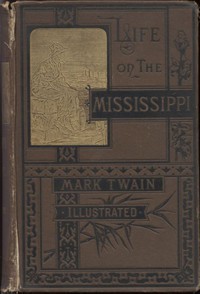
Life on the Mississippi is also a travel book, recounting his trips on the Mississippi River, from St. Louis to New Orleans and then from New Orleans to Saint Paul, many years after the war.
Black Beauty was written from a horse as main character's perspective. She wrote it in the last years of her life, during which she was bedridden and seriously ill.
St. Ives: Being the Adventures of a French Prisoner in England was completed by Arthur Quiller-Couch. Unable to write, Stevenson dictated thirty chapters of the novel to his stepdaughter as a diversion from his debilitating illness.
A Dream of John Ball; and, A King's Lesson features the rebel priest John Ball, who was accused of being a Lollard. He is famed for his question "When Adam delved and Eve span, who was then the gentleman?
An Occurrence at Owl Creek Bridge was originally published by the San Francisco Examiner and was first collected in Bierce's book Tales of Soldiers and Civilians. Bierce's abandonment of strict linear narration in favor of the internal mind of the protagonist is an early example of the stream-of-consciousness narrative mode.
A Journal of the Plague Year Being Observations or Memorials of the Most Remarkable Occurrences, as Well Public as Private, Which is an account of one man's experiences of the year, in which the bubonic plague struck the city of London in what became known as the Great Plague of London, the last epidemic of plague in that city, as part of the larger, centuries-long second plague pandemic.
Kidnapped has attracted the praise and admiration of writers as diverse as Henry James, Jorge Luis Borges, and Hilary Mantel. Kidnapped is written in English with some dialogue in the Lowland Scots language.
The Princess of Cleves was regarded by many as the beginning of the modern tradition of the psychological novel and a classic work. Its author is generally held to be Madame de La Fayette.
Master Humphrey's Clock began with a frame story in which Master Humphrey tells about himself and his small circle of friends (which includes Mr. Pickwick), and their penchant for telling stories. Several short stories were included, followed by the novels The Old Curiosity Shop and Barnaby Rudge.
Vanity Fair was published as a single volume in with the subtitle A Novel without a Hero. Vanity Fair is sometimes considered the "principal founder" of the Victorian domestic novel.
A Child's History of England first appeared in serial form in Household Words, running from 25 January to 10 December. Dickens also published the work in book form in three volumes: the first volume on 20 December, the second on 25 December and the third on 24 December.
The Book of Tea (茶の本, Cha no Hon) by Okakura Kakuzō is a long essay linking the role of chadō (teaism) to the aesthetic and cultural aspects of Japanese life and protesting Western caricatures of "the East".
The Story of the Treasure Seekers Being the Adventures of the Bastable Children in Search of a Fortune recounts Dora, Oswald, Dicky, Alice, Noel, and Horace Octavius (H. ) Bastable, and their attempts to assist their widowed father and recover the fortunes of their family.
The Last of the Mohicans; A narrative of 1757 is the second book of the Leatherstocking Tales pentalogy and the best known to contemporary audiences. The Pathfinder, published 14 years later, is its sequel; its prequel, The Deerslayer, was published a year after The Pathfinder.
Peacock wrote all but the last three chapters of Maid Marian at Marlow. He wrote to Percy Bysshe Shelley that he did not find "this brilliant summer", "very favourable to intellectual exertion" but before it was quite over "rivers, castles, forests, abbeys, monks, maids, kings, and banditti were all dancing before me like a masked ball".
Joe Wilson and His Mates was released in hardback by William Blackwood in when Lawson was living in England, and features one of the author's better known stories in "The Loaded Dog". The collection contains twenty stories which are mostly reprinted from a variety of newspaper and magazine sources, with several published here for the first time.
The Arrow of Gold: A Story Between Two Notes was originally titled "The Laugh" and published serially in Lloyd's Magazine. The Arrow of Gold: A Story Between Two Notes is set in Marseille in the 1870s during the Third Carlist War.
King Henry VI, Part 1 is set during the lifetime of King Henry VI of England. Henry VI, Part 1 takes up the loss of England's French territories and the political machinations leading up to the Wars of the Roses, as the English political system is torn apart by personal squabbles and petty jealousy.
The Lamentable Tragedy of Titus Andronicus, often shortened to Titus Andronicus, is a tragedy by William Shakespeare, believed to have been written. Titus Andronicus is thought to be Shakespeare's first tragedy and is often seen as his attempt to emulate the violent and bloody revenge plays of his contemporaries, which were extremely popular with audiences throughout the 16th century.
King Henry IV, Part 1 was composed in the later years of the reign of Elizabeth I, when questions of succession and political stability were prominent. Set in England in the early 1400s during the reign of Henry IV, the play depicts rebellion against the crown alongside the development of Prince Hal, the future Henry V, and examines themes of leadership and the formation of the heir apparent.
King Henry IV, Part 2 is the third part of a tetralogy, preceded by Richard II and Henry IV, Part 1 and succeeded by Henry V. The play is often seen as an extension of aspects of Henry IV, Part 1, rather than a straightforward continuation of the historical narrative, placing more emphasis on the highly popular character of Falstaff and introducing other comic figures as part of his entourage, including Ancient Pistol, Doll Tearsheet, and Justice Robert Shallow.
King Henry V recounts King Henry V of England, focusing on events immediately before and after the Battle of Agincourt during the Hundred Years' War. In the First Quarto text, it was titled The Cronicle History of Henry the fift, and The Life of Henry the Fifth in the First Folio text.
The Tragedy of Julius Caesar (First Folio title: The Tragedie of Ivlivs Cæsar), often shortened to Julius Caesar, is a historical tragedy by William Shakespeare, believed to have been written and first performed. The play portrays the political conspiracy that led to the assassination of the Roman dictator Julius Caesar and Rome's subsequent civil war.
Although it is listed as a tragedy in the First Folio, modern critics often classify Cymbeline as a romance or even a comedy. Like Othello and The Winter's Tale, it takes up the themes of innocence and jealousy.
Anabasis ( ə-NAB-ə-sis; Ancient Greek: Ἀνάβασις [anábasis]; lit. 'An Ascent') is the most famous work of the Ancient Greek professional soldier and writer Xenophon.
The Apology of Socrates to the Jury (Ancient Greek: Ἀπολογία Σωκράτους πρὸς τοὺς Δικαστάς), by Xenophon of Athens, is a Socratic dialogue about the legal defence that the philosopher Socrates presented at his trial for the moral corruption of Athenian youth; and for asebeia (impiety) against the pantheon of Athens; judged guilty, Socrates was sentenced to death.
The French Revolution: A History was written by the Scottish essayist, historian and philosopher Thomas Carlyle. A massive undertaking which draws together a wide variety of sources, Carlyle's history—despite the unusual style in which it is written—is considered to be an authoritative account of the early course of the Revolution.
The papers themselves came to be known collectively as the Federalist Papers beginning in the nineteenth century. The first seventy-seven of these essays were published serially in the Independent Journal, the New York Packet, and the Daily Advertiser between October and April.
The Story of an African Farm was South African author Olive Schreiner's first published novel. The Story of an African Farm was published in under the pseudonym Ralph Iron.
King Richard III is labelled a history in the First Folio and is usually considered one. In the quarto edition and elsewhere it is listed as a tragedy given its meditations on conscience, decision making, and death.
The Last Days of Pompeii was inspired by the painting The Last Day of Pompeii by the Russian painter Karl Briullov, which Bulwer-Lytton had seen in Milan. The Last Days of Pompeii culminates in the cataclysmic destruction of the city of Pompeii by the eruption of Mount Vesuvius in AD 79.
In Plato's Ion (; Ancient Greek: Ἴων) Socrates discusses with the titular character, a professional rhapsode who also lectures on Homer, the question of whether the rhapsode, a performer of poetry, gives his performance on account of his skill and knowledge or by virtue of divine possession.
The speakers are Socrates and Menexenus, who is not to be confused with Socrates' son Menexenus. The Menexenus of Plato's dialogue appears also in the Lysis, where he is identified as the "son of Demophon", as well as the Phaedo.
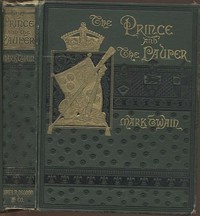
The Prince and the Pauper was first published Canada, before its publication in the United States. The Prince and the Pauper represents Twain's first attempt at historical fiction.
The Pathfinder; Or, The Inland Sea is the fourth novel Cooper wrote featuring Natty Bumppo, his fictitious frontier hero, and the third chronological episode of the Leatherstocking Tales. The inland sea of the title is Lake Ontario.
Extracts from Adam's Diary, translated from the original ms was first published in The Niagara Book, and was collected in Twain's book My Debut as a Literary Person with Other Essays and Stories. "Extracts from Adam's Diary" was first published as a book by Harper & Brothers, with numerous illustrations by Frederick Strothmann.
The Little Shepherd of Kingdom Come tells the rags-to-respectability tale of orphan Chad Buford. The Little Shepherd of Kingdom Come was the first novel to sell a million copies in the US.
The Pioneers; Or, The Sources of the Susquehanna was the first of five novels published which became known as the Leatherstocking Tales. The Pioneers is the fourth novel in terms of the chronology of the novels' plots.
The Descent of Man, and Selection in Relation to Sex is a book by English naturalist Charles Darwin, first published, which applies evolutionary theory to human evolution, and details his theory of sexual selection, a form of biological adaptation distinct from, yet interconnected with, natural selection.
The Riddle of the Sands has been made into feature-length films for both cinema and television. The Riddle of the Sands "owes a lot to the wonderful adventure novels of writers like Rider Haggard, that were a staple of Victorian Britain".
The Naturalist on the River Amazons, subtitled A Record of the Adventures, Habits of Animals, Sketches of Brazilian and Indian Life, and Aspects of Nature under the Equator, during Eleven Years of Travel, is a book by the British naturalist Henry Walter Bates about his expedition to the Amazon basin.
The Vicomte de Bragelonne is the third and last of The d'Artagnan Romances, following The Three Musketeers and Twenty Years After. The Vicomte de Bragelonne appeared first in serial form.
Set in Southern California after the Mexican–American War and annexation of the territory by the United States, Ramona explores the life of a mixed-race Scottish–Native American orphan girl. Ramona was inspired by the marriage of Hugo Reid and Victoria Reid.
Antiquities of the Jews contains an account of the history of the Jewish people for Josephus's gentile patrons. In the first ten volumes Josephus follows the events of the Hebrew Bible beginning with the creation of Adam and Eve.
Quo Vadis: A Narrative of the Time of Nero recounts a romantic love that develops between Lygia (Ligia in Polish), a Christian woman and barbarian hostage, and Marcus Vinicius, a young Roman patrician. Quo Vadis: A Narrative of the Time of Nero takes place in the city of Rome under the rule of Roman emperor Nero, from c.
Doctor Thorne is the third book in his Chronicles of Barsetshire series, between Barchester Towers and Framley Parsonage. The idea of the plot was suggested to Trollope by his brother Thomas.
Fenimore Cooper's Literary Offences draws on examples from The Deerslayer and The Pathfinder from Cooper's Leatherstocking Tales. The essay is characteristic of Twain's biting, derisive, and highly satirical style of literary criticism, a form he also used to deride such authors as Oliver Goldsmith, George Eliot, Jane Austen, and Robert Louis Stevenson.
Leviathan or The Matter, Forme and Power of a Commonwealth Ecclesiasticall and Civil, commonly referred to as Leviathan, is a work of social and political theory by the English empiricist philosopher and political theorist Thomas Hobbes (1588–1679), published in (revised Latin edition ).
The Deerslayer, or The First War-Path was James Fenimore Cooper's fifth and last novel published his Leatherstocking Tales. Its – time period makes it the first installment chronologically and in the lifetime of the hero of the Leatherstocking tales, Natty Bumppo.
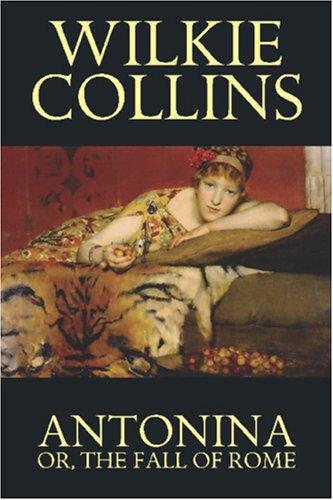
Antonina; Or, The Fall of Rome was completed and, after the first two publishers refused to accept it, it was issued by Richard Bentley as a three-volume book early in 1850. Antonina; Or, The Fall of Rome is the only example of Collins writing a classical romance novel; and it was met, as Collins later recalled, "with such a chorus of praise as has never been sung over me since".
France and England in North America, Part I: Pioneers of France in the New World was well regarded at the time of publication, and continues to enjoy a reputation as a literary masterpiece.
The Decameron ( dih-KAM-ər-ən; Italian: Decameron [deˈkaːmeron, dekameˈrɔn, -ˈron] or Decamerone [dekameˈroːne]), subtitled Prince Galehaut (Old Italian: Prencipe Galeotto [ˈprentʃipe ɡaleˈɔtto, ˈprɛn-]), is a gathering of short stories by the 14th-century Italian author Giovanni Boccaccio (1313–1375).
Hospital Sketches is a compilation of four sketches based on letters Louisa May Alcott sent home during the six weeks she spent as a volunteer nurse for the Union Army during the American Civil War in Georgetown.
Cinq Mars portrays the rebellious conspiracy of Henri Coiffier de Ruzé, Marquis of Cinq-Mars during the reign of Louis XIII. Cinq-Mars unsuccessfully attempted to overthrow the Chief Minister Cardinal Richelieu and was executed.
Marius the Epicurean explores the intellectual development of its protagonist, a young Roman of integrity, in his pursuit of a congenial religion or philosophy at a time of change and uncertainty that Pater likened to his own era. The narration is third-person, slanted from Marius's point of view, added to which are various interpolated discourses, ranging from adaptations of classical and early Christian writings to Marius’s diary and authorial comment.
The Fifteen Decisive Battles of the World: from Marathon to Waterloo recounts the fifteen military engagements which, according to the author, had a significant impact on world history.
The Adventures of Roderick Random is partially based on Smollett's experience as a naval-surgeon's mate in the Royal Navy, especially during the Battle of Cartagena de Indias. In the preface, Smollett acknowledges the connections of his novel to the two satirical picaresque works he translated into English: Miguel de Cervantes' Don Quixote (–15) and Alain-René Lesage's Gil Blas (–47).
Two Years Before the Mast is a memoir by the American author Richard Henry Dana Jr., published, having been written after a two-year sea voyage from Boston to California on a merchant ship starting.
Thackeray, who based the novel on the life and exploits of the Anglo-Irish rake and fortune-hunter Andrew Robinson Stoney, later reissued it under the title The Memoirs of Barry Lyndon, Esq. Barry Lyndon is narrated by Lyndon himself, who functions as a quintessentially unreliable narrator.
The Adventures of Mr. Verdant Green covers the exploits of Verdant Green, a first-year student at Oxford University. Green is an undergraduate at the fictional Brazenface College.
La Fortune des Rougon (The Fortune of the Rougons), originally published, is the first novel in Émile Zola's monumental twenty-volume series Les Rougon-Macquart. The Fortune of the Rougons is partly an origin story, with a large cast of characters - many of whom become the central figures of later novels in the series - and partly an account of the December coup d'état that created the French Second Empire under Napoleon III.
Guy Mannering; or, The Astrologer is the second of the Waverley novels by Walter Scott, published anonymously. According to an introduction that Scott wrote, he had originally intended to write a story of the supernatural, but changed his mind soon after starting.
Mr. President, - I am to speak of the Duel between France and Germany, with its Lesson to Civilization. In calling the terrible war now waging a Duel, I might content myself with classical authority, Duellum being a well-known Latin word for War.
Rob Roy is probably set, the year of the first Jacobite rising, and the social and economic background to that event are an important element in the novel, though it is not treated directly. The depiction of Rob Roy bears little relation to the historical figure: "there are two Rob Roys.
It is inspired by the story of the Companions of Jehu, a group of Royalist vigilantes during the French Revolution. The Companions of Jehu was also turned into a play by Dumas and Charles Gabet premiering at the Théâtre de la Gaîté on 2 July.
The Treaties of Canada with the Indians of Manitoba and the North-West Territories Including the Negotiations on Which They Were Based, explains about the treaties set by the North American Natives.
Pelham was his breakthrough novel, launching him as one of Britain's leading authors. Pelham is part of the tradition of silver fork novels that enjoyed great popularity in the late Regency and early Victorian eras.
The Columbiad: A Poem grew out of Barlow's earlier poem The Vision of Columbus. Intended as a national epic for the United States, it was popular with the reading public and compared with Homer, Virgil and Milton.
Satanstoe; Or, the Littlepage Manuscripts. A Tale of the Colony, sometimes listed with the alternate title The Family of Littlepage or The Littlepage Manuscripts, is the first of a three novel cycle, followed by The Chainbearer and The Redskins. Satanstoe; Or, the Littlepage Manuscripts. A Tale of the Colony is a fictional autobiography which explores the 18th century colony of New York.
The Haunted Mind (From "Twice Told Tales") was first published in The Token and Atlantic Souvenir,. The Haunted Mind (From "Twice Told Tales") was later included in Volume Two of Twice-Told Tales, a gathering of short stories by Hawthorne published.
The Man of Adamant (From: "The Snow Image and Other Twice-Told Tales") was first published in the edition of The Token and Atlantic Souvenir, edited by Samuel Griswold Goodrich. The Man of Adamant (From: "The Snow Image and Other Twice-Told Tales") later appeared in Hawthorne's final gathering of short stories The Snow-Image, and Other Twice-Told Tales, published by Ticknor, Reed & Fields.
Leila or, the Siege of Granada, Book I is set in Granada, Spain at the end of the Middle Ages — beginning in the summer. Leila or, the Siege of Granada, Book I was originally published in an expensive form, with many engraved illustrations.
Wyandotté; Or, The Hutted Knoll: A Tale is set in New York state during the American Revolution. The main character of the novel is an Indian, "Saucy Nick", also called Wyandotté ("Great Chief"), whose depictions violate stereotypes of Native Americans.
A Romance of the Republic, published, was Lydia Maria Child's fourth novel and the capstone of her remarkable literary career. Written shortly after the Civil War, it offered a progressive alternative to Uncle Tom's Cabin.
The Coquette, or, The History of Eliza Wharton A Novel: Founded on Fact was published anonymously, and did not appear under the author's real name until, 16 years after Foster's death. The Coquette, or, The History of Eliza Wharton A Novel: Founded on Fact was one of the best-selling novels of its time and was reprinted eight times.
The Man Who Laughs: A Romance of English History takes place in England beginning and extends into the early 18th-century reign of Queen Anne. The Man Who Laughs: A Romance of English History depicts England's royalty and aristocracy of the time as cruel and power-hungry.
Cosmos: A Sketch of the Physical Description of the Universe began as a lecture series delivered by Humboldt at the University of Berlin, and was published in five volumes (the fifth was posthumous and completed based on Humboldt's notes). In the first volume, Humboldt paints a general "portrait of nature", describing the physical nature of outer space and the Earth.
The False One: A Tragedy was first published in the first Beaumont and Fletcher folio. This classical history tells of the meeting and romance of Julius Caesar and Cleopatra, and the betrayal and death of Pompey the Great at the hands of one of his own officers, the "false one" of the title.
The lost hunter: A tale of early times also set him on the path to establish the subgenre of New Journalism that he called "Gonzo", a style in which the writer becomes central to, and a participant in, the narrative. He became known for his intense dislike of Richard Nixon, who he claimed represented "that dark, venal, and incurably violent side of the American character".
The Man Without a Country, and Other Tales recounts a young American officer who declares himself disgusted with his country during a trial for treason, and wishes he never hears about her ever again. He is sentenced to spend the rest of his days at sea without so much as a word of news about the United States.
The Anti-Slavery Alphabet was written by two of the society's members, Hannah and Mary Townsend, with the intention of encouraging abolitionist ideas in young children.
A Short History of the English People is a book written by English historian John Richard Green. "it is a history, not of English Kings or English Conquests, but of the English People.
Franco-Gallia: Or, An Account of the Ancient Free State of France, and Most Other Parts of Europe, Before the Loss of Their Liberties is a French constitutional history treatise published by François Hotman in 1573 that argued for representative government and an elective monarchy.
The Great Book-Collectors takes up bibliophilia and bibliomania. The Great Book-Collectors is generally available online rather than in original in major collections.
Amerigo Vespucci was an Italian explorer and navigator from the Republic of Florence after whom the Americas are named. Vespucci participated in at least two voyages of the Age of Discovery, first on behalf of Spain and then for Portugal.
The queen's necklace is loosely based on the Affair of the Diamond Necklace, an episode involving fraud and royal scandal that made headlines at the court of Louis XVI in the 1780s.
The Rifle Rangers depicts the plight of American soldiers stationed in Mexico during the war and their effect on the native population. The Rifle Rangers stays with the life of protagonist Captain Jack Haller as he helms the newly formed American battalion, dubbed the "Rifle Rangers".
Venice Preserved: A Tragedy in Five Acts was first staged, with Thomas Betterton as Jaffeir and Elizabeth Barry as Belvidera. The play was soon printed and enjoyed many revivals through to the 1830s.
Romola is "a deep study of life in the city of Florence from an intellectual, artistic, religious, and social point of view". Romola takes place amidst actual historical events during the Italian Renaissance, and includes in its plot several notable figures from Florentine history.
The Future of the American Negro, a book written in 1899 by American educator Booker T. Washington, set forth his ideas regarding the history of enslaved and freed African-American people and their need for education to advance themselves.
Germinie Lacerteux is the fourth of six novels they wrote. Germinie Lacerteux is that of a poor country girl who comes to Paris, where her temperament renders her peculiarly liable to temptation.
The history of London, the capital and largest city of England and the United Kingdom, extends to over 2500 years. In that time, it has become one of the world's most impactful financial and cultural centres.
Music and Some Highly Musical People represents perhaps the first attempt to assess American music across multiple genres in a single volume. Music and Some Highly Musical People includes biographies of more than forty African-American musicians and touring groups.
Religion in Japan is manifested primarily in Shinto and in Buddhism, the two main faiths, which Japanese people often practice simultaneously. Syncretic combinations of both, known generally as shinbutsu-shūgō, are common; they represented Japan's dominant religion before the rise of State Shinto in the 19th century.
Shirley was Brontë's second published novel after Jane Eyre (originally published under Brontë's pseudonym Currer Bell). Shirley is set in Yorkshire, during the industrial depression resulting from the Napoleonic Wars and the War.
The Communist Manifesto, originally the Manifesto of the Communist Party, is a political pamphlet written by Karl Marx and Friedrich Engels. Manifesto of the Communist Party was commissioned by the Communist League and published in London.
The Red City: A Novel of the Second Administration of President Washington is set in Philadelphia in the 1790s, during the second term of George Washington's Presidency when the city served as the temporary capital of the United States. Its general theme is of the city's "greatness" during this era.
The Battle of Gettysburg was fought in the American Civil War between the Union and Confederate armies and around Gettysburg, Pennsylvania. The battle, won by the Union, is widely considered the Civil War's turning point, leading to an ultimate victory of the Union and the preservation of the nation.
A Captured Santa Claus depicts the origin of Santa Claus (played by Huddleston), and his modern-day adventure to save Patch, one of his elves (Moore) who has been manipulated by B. An unscrupulous toy company executive (Lithgow).
The Story of Sir Launcelot and His Companions consists of a large series of episodes in the legend of the chief knight of the Round Table, Sir Launcelot, and many of his friends, including the Lady Elaine, Sir Ewaine, and Sir Gareth.
The prime minister of India (ISO: Bhāratīya Gaṇarājyasya Pradhānamantrī) is the head of government of the Republic of India. Executive authority is vested in the prime minister and his chosen Council of Ministers, despite the President of India being the nominal head of state.
The History of the Five Indian Nations of Canada Which are dependent on the Province of New-York, and are a barrier between the English was first published in New York and a second edition was published in London.
The history of Prince Edward Island covers several historical periods, from prehistory before European contact, the settlement of Europeans in the seventeenth century, to the present day. Prior to the arrival of Europeans, the island formed a part of Mi'kma'ki, the lands of the Mi'kmaq people.
The Impending Crisis of the South: How to Meet It was written mostly in Baltimore, but, as he pointed out, it would have been illegal to publish it there. The Impending Crisis of the South: How to Meet It was a strong attack on slavery as inefficient and a barrier to the economic advancement of the South in general and the non-slaveholding whites of the South in particular.
Ormond; Or, The Secret Witness. Focuses on the ways in which individuals change in reaction to their social environments. Ormond; Or, The Secret Witness. Stays with a female protagonist Constantia and her relationship with the mysterious Ormond.
Antonio Stradivari ( also US:, Italian: [anˈtɔːnjo stradiˈvaːri]; c. – 18 December ) was an Italian luthier and a craftsman of string instruments such as violins, cellos, guitars, violas and harps. The Latinized form of his surname, Stradivarius, as well as the colloquial Strad are terms often used to refer to his instruments.
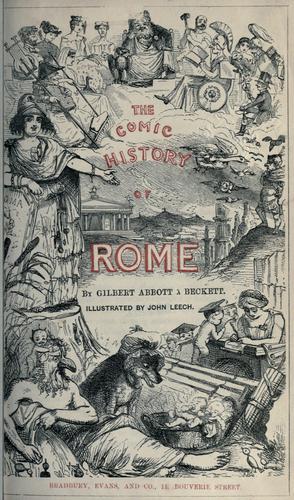
The Comic History of Rome was published by Bradbury and Evans, with text by the English humorist Gilbert Abbott à Beckett and comic illustrations by John Leech, famous for his illustrations for the novella A Christmas Carol by Charles Dickens. In his introduction, à Beckett wrote that, "The writer of this book is animated by an earnest wish to aid, as far as he is able, in the project of combining instruction with amusement.
In the Arctic Seas A Narrative of the Discovery of the Fate of Sir John Franklin and his Companions: Rear-Admiral Sir John Franklin was a British Royal Navy officer, explorer and colonial administrator. During his third and final expedition, an attempt to traverse the Northwest Passage, Franklin's ships became icebound off King William Island in what is now Nunavut, where he died in June.
Socialism, Utopian and Scientific was primarily extracted from a longer polemic work published, Anti-Dühring. The title Socialism: Utopian and Scientific was adopted for the first English edition — the tenth language in which the book appeared.
The History of Prostitution: Its Extent, Causes, and Effects throughout the World analyzes prostitution in different civilizations throughout world history with a particular focus on New York in the 1850s.
The Survey of London was founded by Charles Robert Ashbee, an Arts-and-Crafts designer, architect and social reformer and was motivated by a desire to record and preserve London's ancient monuments. The first volume was published, but the completion of the series remains far in the future.
The Last Boer War consists of a reprint of the portions of Cetywayo and His White Neighbours ( second ed. ) dealing with the Transvaal, together with a new preface ("Author's Note") and some additional material.
Confessions of a Thug was a best-seller in 19th-century Britain, becoming the British Empire's most sensational ethnographic fiction in the first half of the 19th century; its avid readers included Queen Victoria. Confessions of a Thug was one of the best-selling crime novels of the 19th century, and was the most influential novel about India prior to Rudyard Kipling's Kim.
History of the Prophet Joseph, by His Mother was originally titled Biographical Sketches of Joseph Smith, the Prophet, and His Progenitors for Many Generations and was published by Orson Pratt in Liverpool.
A Visit to the Philippine Islands was the culmination of the 333-year colonial rule of Spain in the archipelago. The Philippines was one of the last major colonies of the Spanish Empire, which had already suffered a massive decline in the 1820s.
Boscobel; or, the royal oak: A tale of the year 1651 first appeared as a serial in The New Monthly Magazine before being published in three volumes by the London publishing house Tinsley Brothers. Boscobel; or, the royal oak: A tale of the year 1651 marked a return to the historical subjects he was best known for, after producing three novels with contemporary settings such as Old Court and Myddleton Pomfret.
Sir William Kirkcaldy of Grange (c. – 3 August ) was a Scottish politician and soldier who fought for the Scottish Reformation. He ended his career holding Edinburgh castle on behalf of Mary, Queen of Scots and was hanged at the conclusion of a long siege.
A History of the Warfare of Science with Theology in Christendom was published within the United States in two volumes by Andrew Dickson White, a founder of Cornell University,. White chronicles the gradual emancipation of science from theology in various fields.
The Oregon boundary dispute or the Oregon Question was a 19th-century territorial dispute over the political division of the Pacific Northwest of North America between several nations that had competing territorial and commercial aspirations in the region.
The Life of Josiah Henson, Formerly a Slave, Now an Inhabitant of Canada, as Narrated by Himself is a slave narrative written by Josiah Henson, who would later become famous for being the basis of the title character from Harriet Beecher Stowe's novel Uncle Tom's Cabin.
St. Leon: A Tale of the Sixteenth Century is eighteenth-century British philosopher William Godwin's fourth novel. Following the success of Things as They Are; or, The Adventures of Caleb Williams, Godwin searched for a topic that would capture his imagination as much as his earlier work.
Life of a Pioneer: Being the Autobiography of James S. Brown recounts Yogananda's life, his search for his guru, and his teachings on Kriya Yoga. Life of a Pioneer: Being the Autobiography of James S. Brown has introduced many to meditation and yoga and has been influential in both Eastern and Western spiritual circles.
Dred: A Tale of the Great Dismal Swamp was first published in two volumes by Phillips, Sampson and Company. Although it enjoyed better initial sales than her previous, and more famous, novel Uncle Tom's Cabin, it was ultimately less popular.
William Caxton (c. – ) was an English merchant, diplomat and writer. He is thought to be the first person to introduce a printing press into England, and as a printer to be the first English retailer of printed books.
The Soil (La terre): A Realistic Novel is the fifteenth novel in Zola's Rougon-Macquart series. The action takes place in a rural community in the Beauce, an area in central France south of Paris.
Many commentators have viewed that one of the main themes of The Prince is that immoral acts are sometimes necessary to achieve political glory. From Machiavelli's correspondence, a version was being written, using a Latin title, De Principatibus (Of Principalities).
It was written in commemoration of the Battle of Talavera, where Sir Arthur Wellesley led an Allied force of British, Portuguese and Spanish troops to a victory over the French in the Peninsular War. The victory led to popular celebrations in Britain and Wellesley was made Lord Wellington.
The history of biology traces the study of the living world from ancient to modern times. Although the concept of biology as a single coherent field arose in the 19th century, the biological sciences emerged from traditions of medicine and natural history reaching back to Ayurveda, ancient Egyptian medicine and the works of Aristotle, Theophrastus and Galen in the ancient Greco-Roman world.
Wealth against commonwealth was published after he had written several essays to The Atlantic Monthly concerning issues with dominating monopolies. Wealth against commonwealth was written in an effort to disparage Standard Oil but also discusses other companies and industrialists.
The South Country was originally published in the poet's collection Five Bells: XX Poems, and was subsequently reprinted in the author's single-author collections and a number of Australian poetry anthologies.
The Discoverie of Witchcraft contains a small section intended to show how the public was fooled by charlatans, which is considered the first published material on illusionary or stage magic. Scot believed that the prosecution of those accused of witchcraft was irrational and not Christian, and he held the Roman Church responsible.
A Vindication of the Rights of Men, in a Letter to the Right Honourable Edmund Burke; Occasioned by His Reflections on the Revolution in France is a political pamphlet, written by the 18th-century British writer and women's rights advocate Mary Wollstonecraft, which attacks aristocracy and advocates republicanism.
Valperga: or, the Life and Adventures of Castruccio, Prince of Lucca is a historical novel by the Romantic novelist Mary Shelley, set amongst the wars of the Guelphs and Ghibellines (the latter of which she spelt "Ghibeline").
The Red Man's Rebuke, later titled The Red Man's Greeting, was an essay written by Simon Pokagon (Potowatomi, c. 1830–1899) which he distributed to those attending the World's Columbian Exposition. The Red Man's Rebuke was published in the form of a sixteen-page, palm-sized birch bark booklet, of which an unknown number of copies were distributed.
The Fortunes of Perkin Warbeck: a romance takes a Yorkist point of view and proceeds from the conceit that Perkin Warbeck died in childhood and the supposed impostor was indeed Richard of Shrewsbury, Duke of York. Henry VII of England is repeatedly described as a "fiend" who hates Elizabeth of York, his wife and Richard's sister, and the future Henry VIII, mentioned only twice in the novel, is a vile youth who abuses dogs.
Le chevalier de Maison-Rouge was translated into English in under the title The Knight of Redcastle. Le chevalier de Maison-Rouge has also been translated as The Knight of Maison-Rouge: A Novel of Marie Antoinette.
Cobwebs to catch flies was a reading primer and was one of the first books to differentiate between reading age groups, and which was widely used until the 1890s.